
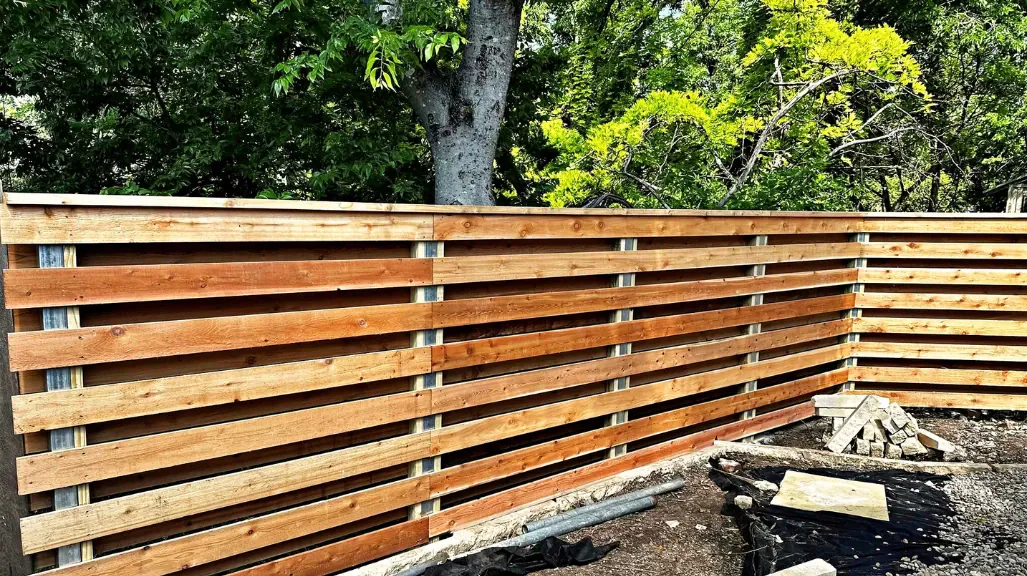
Black gumbo is the dark, sticky clay that turns the eastern Cedar Park metro into a swamp every spring and a cracked desert every August. Properties on it lose fences faster than properties on caliche or sandy loam, mostly because nobody addresses the drainage problem before installation. This guide covers what gumbo is, how it destroys fences, and drainage strategies that make a fence last 15-20 years instead of 6-8.
If you’ve already lost posts to gumbo and they need rebuilding with proper drainage, call (512) 566-7520. We rebuild fences across Manor and the eastern flank of the Cedar Park metro, where gumbo problems are most common.
Quick Answer: How to Handle Black Gumbo
Black gumbo destroys fences through saturated post bases that rot wood and corrode hardware, plus swell-shrink cycles that lift and drop posts seasonally. Fixes: gravel drainage layers, slope grading away from the fence line, and French drains for low-spot runs.
What Black Gumbo Actually Is
Black gumbo is a heavy, expansive clay rich in montmorillonite, a mineral that absorbs water many times its volume. The “black” comes from organic matter accumulated over thousands of years on the Blackland Prairie, which runs through eastern Williamson and Travis counties. The “gumbo” comes from the wet texture: sticky enough to pull boots off, gummy enough to clog tools.
Three properties make gumbo brutal for fences:
- It expands dramatically when saturated and shrinks when dry, which means the soil literally moves seasonally
- It holds water against anything buried in it, which keeps post bases wet for weeks after rain
- It cracks open in summer to depths of 2-3 feet, exposing post foundations to air, debris, and pest access
Constant moisture, seasonal movement, and summer cracking shorten the life of fences.
Where Black Gumbo Shows Up in the Metro
Cedar Park Metro sits on a soil transition. Western neighborhoods like Leander and Liberty Hill are Edwards Plateau caliche territory. Eastern neighborhoods, including Manor, Buda, and the eastern Round Rock subdivisions, sit on Blackland Prairie black gumbo.
Many central neighborhoods have both within a single property. Some Cedar Park lots have caliche on the front-yard ridge and gumbo in the back-yard low spot. The back fence rots faster than the front, sometimes by 4-5 years, even though they’re 80 feet apart.
If you’re not sure which soil you’ve got, dig a 12-inch hole and pour water in. Caliche drains within minutes. Gumbo holds water for hours and turns into mud you can sculpt.
Why Gumbo Destroys Fences
Three failure modes account for most gumbo-related damage we see during repair work:
Post-base rot. Wood posts in saturated gumbo continuously absorb moisture. Even PT posts rated for ground contact show rot at the soil line within 8-10 years instead of 15-20. The rot starts inside, where treatment penetration is shallowest.
Hardware corrosion. Galvanized hardware in wet gumbo corrodes faster than in well-drained soil. Stainless handles it better but costs 3-4x more upfront. Most fences with standard hardware show fastener bleed-through staining within 5-7 years on gumbo.
Post heave from swell-shrink cycles. When gumbo expands in spring rains, posts rise. When it shrinks in summer drought, posts drop. Over the years, this lifts posts unevenly, creating the wavy fence-top profile typical of older gumbo installations. Concrete footings reduce but don’t eliminate the cycle.
Drainage Strategies That Actually Work
Four interventions handle most gumbo situations:
Gravel base under post footings. Excavate 6-8 inches below the planned concrete depth and fill with crushed stone or pea gravel. The gravel breaks the capillary path that draws water up to the post base. Handles light-to-moderate gumbo and adds 15% to the installation cost.
Slope grading along the fence line. If the fence line sits in the low spot of the yard, as it does for many Round Rock eastside lots, water collects there permanently. Re-grading to slope away from the fence (1-2% minimum) directs runoff to a drainage area and keeps the fence line drier between rains.
French drains for chronic wet spots. A perforated pipe in a gravel-filled trench runs alongside the fence line and routes water to an outfall or storm drain. The heavy-artillery solution for runs that flood every spring. Costs 4-8x a standard install but doubles or triples fence life on the worst sites.
Raised planting beds along the fence base. A simple landscape solution: build the soil along the fence line up by 4-6 inches with sandy loam or compost. The raised soil drains faster, and the elevated grade keeps standing water away from post bases.
Material Choices That Hold Up Better
Gumbo punishes some fence materials more than others:
- Cedar with proper drainage: usable, with the understanding that even cedar’s rot resistance has limits when constantly wet
- PT pine for posts only, cedar for visible boards: a common compromise that adds 3-5 years of post life
- Metal posts with cedar boards: the strongest gumbo solution; metal posts don’t rot regardless of moisture
- Vinyl fencing: impervious to moisture damage, but posts still need drainage to prevent heaving
- Chain link: galvanized steel handles moisture better than wood, especially with vinyl coating
Regardless of the material chosen, the fence still needs drainage work. Material choice alone doesn’t solve gumbo problems.
Common Gumbo Mistakes
Five mistakes account for most gumbo-related failures we see during fence repair work:
- Setting posts in gumbo without gravel drainage layers. Concrete alone holds water against the post.
- Ignoring the slope when the fence line is in a low spot. The fence becomes a drainage dam, worsening the problems.
- Using budget hardware on wet sites. Galvanized lasts half as long in gumbo as it does in well-drained soil.
- Pouring concrete during the wet season when the gumbo is saturated. The concrete cures into mud rather than forming a firm surface.
- Skipping pre-installation drainage assessment. A 30-minute walk during a heavy rain event reveals everything you need to know.
When to Bring in a Contractor
DIY gumbo fence work is doable for the gravel-base approach, but slope grading, French drains, and site drainage usually need professional assessment. Site evaluation is where most DIY gumbo projects fail: homeowners install a perfectly built fence in a location that floods every spring, and 5 years later, the posts are rotting.
For fence installation on known gumbo sites, professional crews handle drainage assessment and gravel base work as part of the standard installation. Even some Liberty Hill low spots show gumbo conditions despite the area being caliche territory. Call (512) 566-7520 for a walkthrough that includes drainage evaluation.
Frequently Asked Questions
How do I know if my soil is black gumbo?
The water test is the fastest. Dig a 12-inch hole and pour a gallon of water in. If the water sits 2+ hours and the soil turns to sticky mud, you have gumbo. Dark soil color is a clue, but not definitive. Texture’s the giveaway: gumbo is genuinely sticky and’ll glue itself to a shovel.
Can I install a fence on gumbo without doing any drainage work?
You can, but expect a 6-10 year fence life instead of 15-20. Whether that tradeoff makes sense depends on how long you’ll stay and what you’re willing to spend on install. For 5-year flips, basic install on gumbo is reasonable. For long-term homes, the drainage upgrade pays back many times over.
Does gumbo affect chain link or metal fences as much as wood?
Less, but not zero. Metal posts in gumbo still heave with swell-shrink cycles, and galvanized coating wears faster in wet soil. The metal doesn’t rot, so failure usually comes from connection points and fittings rather than posts themselves. Vinyl-coated chain link does better than bare galvanized.
Is there a best season to install fences in Gumbo?
Late summer and early fall, when gumbo is at its driest. Spring installs (March-May) often hit gumbo saturated, which’ll make excavation harder and concrete curing unreliable. Winter installs work if dry, but freeze-thaw can complicate concrete.
What about adding sand to gumbo to improve drainage?
Doesn’t work as well as people expect. Mixing sand into expansive clay creates something closer to concrete than improved drainage. The actual fix is to replace the soil in critical zones with sandy loam, not to amend the gumbo in place.
Should I use a longer post in gumbo soil?
Sometimes, but the bigger issue is drainage, not depth. Adding 6 extra inches of post depth into wet gumbo just puts more wood in saturated soil. Drainage upgrades have more impact on fence life than depth changes.