
What Fence Installation in Cedar Park Actually Involves
Fence installation in Cedar Park covers material selection, post-setting in clay soil, HOA compliance, gate hardware, and grade adjustment. The full scope, from walkthrough to final cleanup, takes two to four days for a standard project, longer for hillside lots.
Most fence failures we repair across Liberty Hill and Manor trace back to two shortcuts during installation: posts set too shallow for clay soil and fasteners that aren’t stainless. Both look like small numbers on the original quote. Both turn into full-fence repair calls within five years.
We see the same pattern from Bee Cave to Buda. Cedar fences leaning at year four. Vinyl panels with rusted brackets at year three. Chain link with sagging top rails at year two. Those contractors optimized for the bid, not the build. Our approach reverses that order: structure and materials first. We’d rather lose a quote on price than win one we can’t stand behind.
Materials We Install
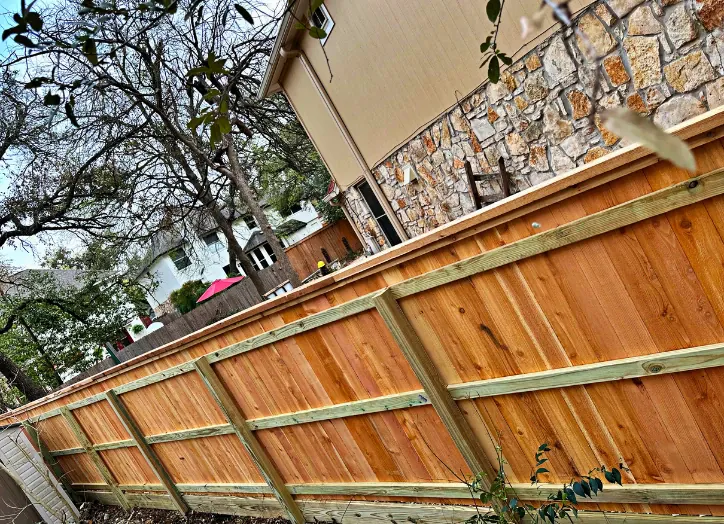
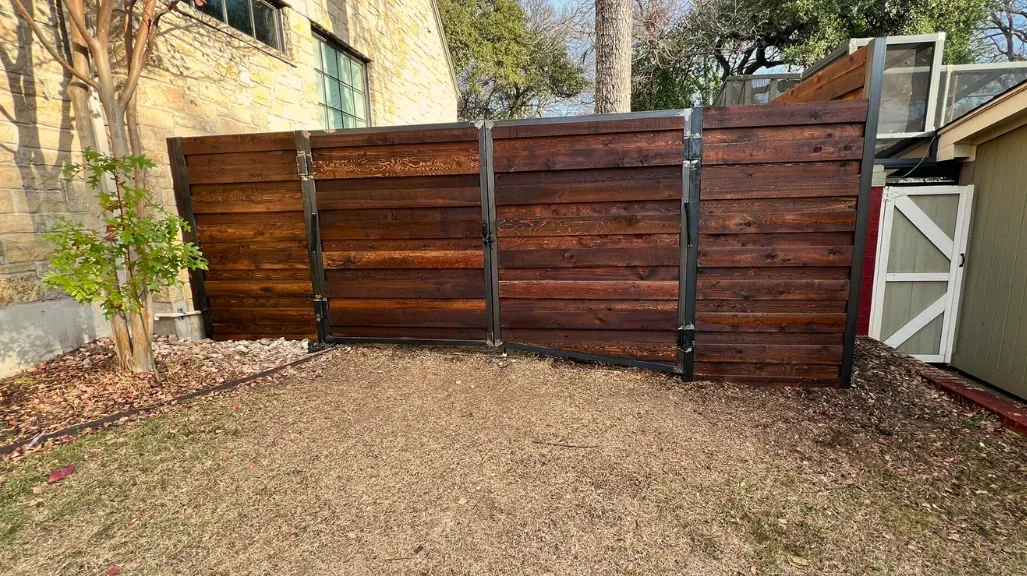
Cedar is the most common material we install. It naturally resists rot, holds stains well, and ages to a warm honey-gray. We use rough-sawn western red cedar pickets from the yard we’ve worked with since 2013. Vinyl handles UV better than any wood and never needs staining. Chain link is the budget choice for pet containment and rural lots, in galvanized or black vinyl-coated finishes. Wrought iron and aluminum cover ornamental and pool-area applications where visibility matters.
We don’t install pressure-treated pine fences. The chemical treatment fights stain absorption, and the boards warp in Texas heat within a few years. If a budget can’t reach cedar, we’ll often recommend a shorter cedar fence over a taller pine fence.
Fence Heights and Styles
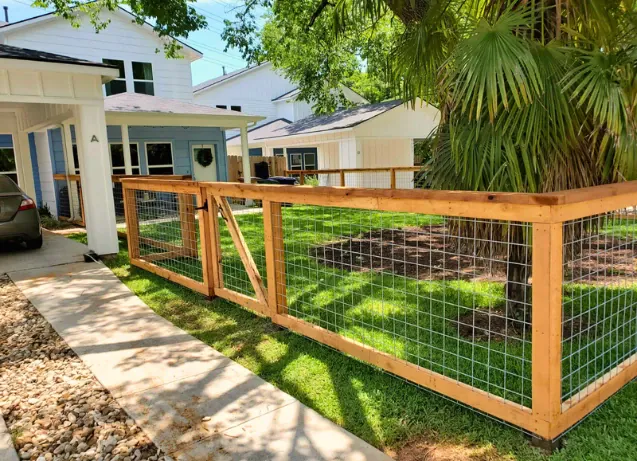
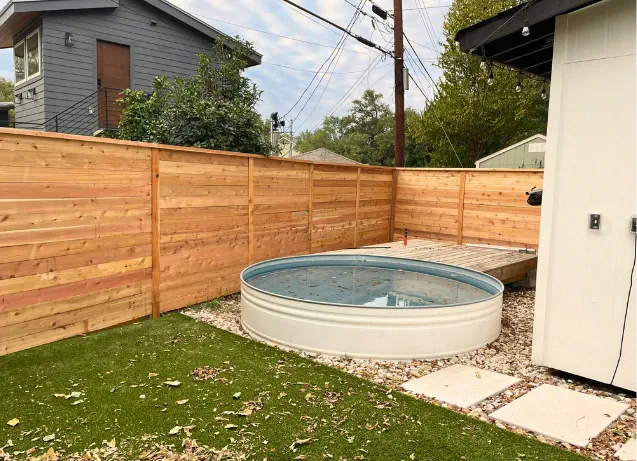
Six-foot fences are the standard residential height across Cedar Park, Round Rock, and most surrounding HOAs. Eight-foot fences require an HOA variance or a property outside an HOA. Four-foot fences cover front yards, pool surrounds, and decorative work. We handle all three. Privacy styles include board-on-board, side-by-side, and shadowbox. Board-on-board gives full visual privacy with overlapping pickets that hide gaps. Side-by-side costs less but shows light gaps after the first dry summer. Shadowbox alternates pickets between rails for a fence that looks finished from both sides.
For homes in larger-lot areas like Lakeway and rural Liberty Hill, eight-foot fences with cap-and-trim are common. For HOA neighborhoods like Twin Creeks, Avery Ranch, and Brushy Creek, six-foot board-on-board cedar with cap-and-trim is the most common spec.
Our Installation Process
We work the same six steps on every fence project. First, we walk the property line and confirm boundaries, especially on shared fences where neighbor agreement matters. Second, we check for irrigation, gas, and utility lines using 811. Third, we set posts thirty to thirty-six inches deep in concrete. Texas clay soil expands and contracts seasonally, and shallow posts lean within two years. Fourth, we hang rails, level them across slope changes, and install pickets. Fifth, we add cap-and-trim and gates with stainless or galvanized hardware. Sixth, we clean up the site, haul out the demolition, and walk the finished fence with you before the invoice.
Install time runs two to four days for a standard 150-foot residential project. Larger lots, hillside terrain, or multiple gates extend that. We give you a firm date range in the quote.
Request a free estimate, and we’ll come out the same week.
HOA Requirements We Build To
Most Cedar Park homeowners we work with live in an HOA community. Each one has its own rules covering height, material, color, picket spacing, and gate placement. We’ve installed enough fences in Twin Creeks, Avery Ranch, Cypress Creek, and Ranch at Brushy Creek to know what passes review on first submission. If your HOA needs a spec sheet, we will put that together for you. No surprise rejection letters.
For homeowners outside HOA jurisdiction, the local code requirements still apply. We pull the property survey as needed, check setback distances, and work with permit partners on any project requiring permitting. We don’t pull permits ourselves, which keeps the chain of responsibility cleaner for you and for us.
Why Post Depth and Fasteners Matter Most
Most fence failures we repair trace back to two decisions made during the original installation. The first is post depth. Central Texas clay swells when wet and contracts when dry, and any post shallower than thirty inches is fighting that movement every season. The industry default of two feet works in northern climates and sandy soils. It doesn’t work here. We set six-foot fence posts thirty inches deep minimum and eight-foot posts thirty-six inches minimum, both in concrete with a flared base.
The second is fasteners. Galvanized fasteners corrode inside cedar within a few years because cedar’s natural acids accelerate the reaction. Stainless or coated decking-grade screws are the right call. The cost difference is small at install. The difference at year fifteen is the difference between a sound fence and one with rotted picket joints.
Areas We Serve for Fence Installation
Cedar Park is the home base. We install fences across Williamson County and into the surrounding suburbs. Most projects run through Cedar Park, Leander, Round Rock, and Georgetown. We also install in Liberty Hill, Manor, and Buda, where larger lots support eight-foot heights, and in Bee Cave and Lakeway, where Hill Country terrain adds complexity to installations. If you’re inside roughly thirty miles of Cedar Park, we serve you.
Frequently Asked Questions
How much does fence installation cost in Cedar Park?
Fence installation cost depends on linear footage, material, height, terrain, gate count, and demolition needs. We don’t quote per linear foot because that hides the variables that drive real cost. Every project gets a written quote that breaks down materials, labor, and the timeline before any work starts.
How long does fence installation take?
A standard 150-foot residential fence takes two to four days. Larger fences, corner lots with multiple gates, or projects requiring removal run longer. We give you a firm timeline in the written quote.
Do I need a permit to install a fence in Cedar Park?
Cedar Park requires a permit for fences taller than seven feet. Six-foot fences typically don’t need one. HOAs separately require approval regardless of height. We work with permit partners when permits are needed.
What's the best fence material for Texas weather?
Cedar holds up well with proper post-setting and annual sealing, lasting fifteen to twenty years. Vinyl handles UV better than wood and skips staining. Chain link works for budget pet containment. Aluminum and iron handle pool surrounds and ornamental work. The right choice depends on budget, maintenance tolerance, and visual goals. We talk through tradeoffs at the walkthrough.
How deep do you set fence posts in Texas clay soil?
Six-foot posts go thirty inches deep minimum, eight-foot posts thirty-six inches minimum, both in concrete with a flared base. Texas clay expansion and contraction make shallow posts lean within a few years. The deeper set is non-negotiable on our projects.
Will my fence look the same on both sides?
It depends on the style. Board-on-board with cap-and-trim looks finished on both sides because the cap conceals the rail side. Most HOAs require the smooth side to face the neighbor, which we handle automatically. Shadowbox layouts look identical from both sides because pickets alternate between the rails. Side-by-side and traditional pickets show the rail-side from the back.
Can you install a fence between neighboring properties?
Yes. We’ve installed shared fences across Cedar Park’s HOA neighborhoods. We confirm property lines from the survey or county records, talk to both parties before scheduling, and document the agreement. Shared projects often split the cost between neighbors.
Do you offer fence repair, staining, and privacy fence installation?
Yes. Our fence repair team handles repairs on existing fences, and we provide fence staining to protect new cedar within the first year.
For full visual screening, we also handle privacy fence installation using six-foot or eight-foot board-on-board cedar or vinyl panels.
Call (512) 566-7520 or visit our blog for installation guides and HOA-specific details. We’ll walk the property within the week and leave with a written quote.