
What We Build for Lakeway Homes
Lakeway fence and deck work covers six-foot cedar privacy, hillside builds with stepped panels, four-foot pool surrounds, ornamental iron and wrought-iron blends on premium estates, deer-resistant fencing in The Hills of Lakeway, and composite decks that handle lake humidity cycles.
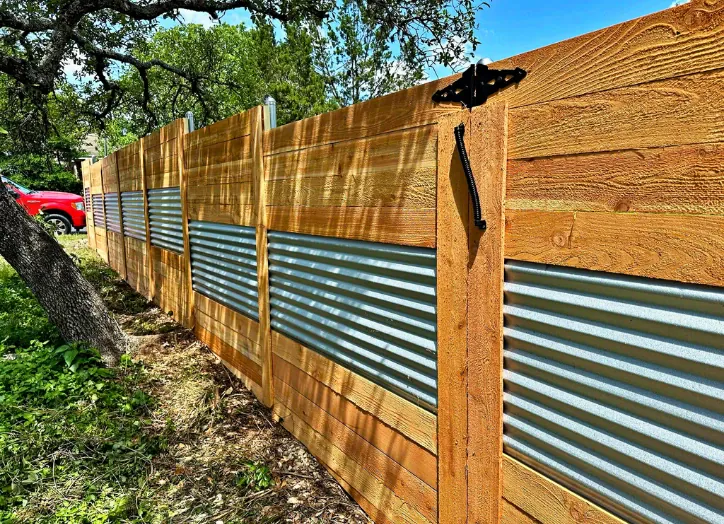
The Lakeway mix is meaningfully different from the suburban work in Round Rock or Leander. Larger lots, premium-skewing properties, and terrain forcing design decisions that flat-lot subdivisions never face. Most back-yard fences are six-foot cedar privacy with cap-and-trim, but estate-tier projects often blend cedar privacy on visible runs with pipe fence or wrought-iron accents on back-property lines facing the lake or surrounding Hill Country. Pool fences come up on roughly one in three projects.
What sets Lakeway work apart is premium-finish expectations plus operational complexity. Steep slopes mean every panel gets stepped or angled. Lake water lowers the age of wood and metal faster than inland water does. Wildlife pressure (especially deer) shows up in decisions that Round Rock or Manor homeowners don’t have to make.
Lakeway Subdivisions and Areas We Serve
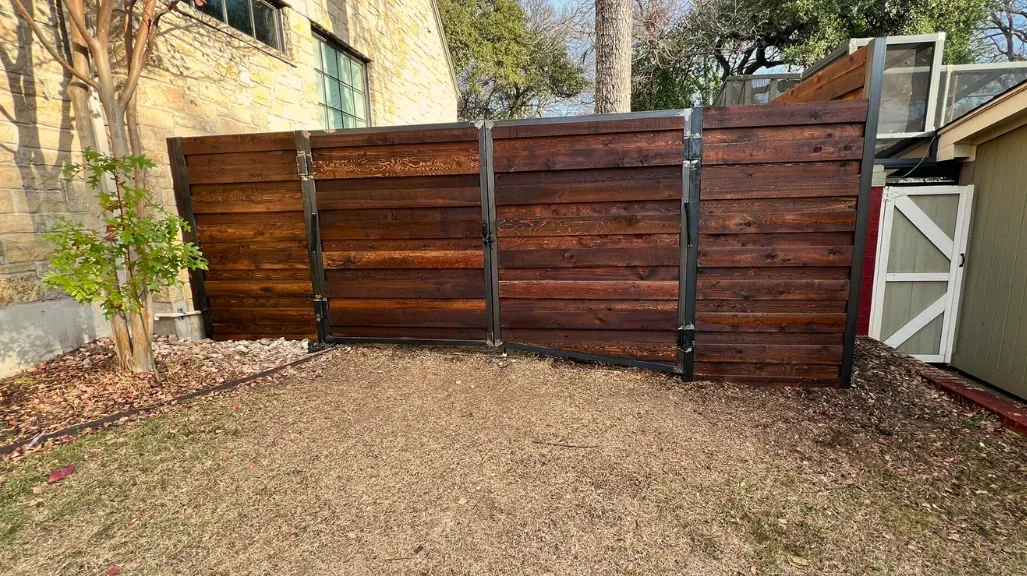
The Hills of Lakeway runs one of the metro’s strictest design review committees. The HOA enforces a tight cedar-stain palette, requires submittal photographs, and has specific rules about fence-height transitions on sloped lots. We’ve handled enough Hills of Lakeway submittals to put together approval packages on the first pass. That matters: rejected submittals add two to four weeks to timelines.
Rough Hollow spans the western edge of Lakeway with a mix of larger estate lots and newer phased construction. The design committee enforces a strict palette on front-yard runs but allows more flexibility on back-property lines facing the surrounding terrain. Pool fences are common because homes typically include in-ground pools as part of the original construction.
Flintrock Falls holds the higher-elevation properties on the southern edge of Lakeway. Steep slopes drive the work here: stepped panels along grade, careful post-setting in shallow soil over limestone, and ornamental iron front-yard accents on visible street-side runs.
Lakeway Highlands covers the central older neighborhoods, with 1980s and 1990s properties reaching twenty-year fence end-of-life, similar to older Round Rock subdivisions. Full replacement work makes up a meaningful share of our Lakeway Highlands projects.
The unincorporated areas outside Lakeway’s city limits, particularly toward Lake Travis on the western edge, don’t fall under HOA jurisdiction. Travis County setbacks still apply, and we work with permit partners on projects requiring permits.
Materials That Work in Lakeway
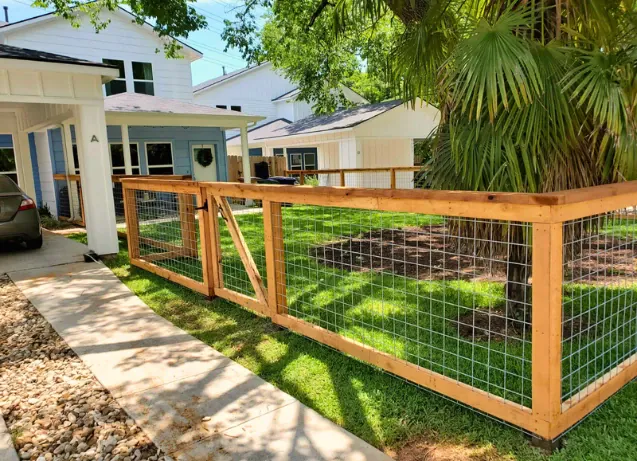
Cedar dominates our wood installs across Lakeway, both for privacy fence installation and shorter front-yard runs. We’ve sourced rough-sawn western red cedar pickets from the same yard since 2013. Composite is overwhelmingly our most-installed deck material in Lakeway because lake humidity ages cedar faster on lake-adjacent decks. Trex Transcend handles the full Texas sun, and TimberTech AZEK is the premium step up for cooler summer surfaces.
Aluminum and ornamental iron handle the four-foot front-yard fences common across Lakeway HOAs, with wrought-iron blends showing up more often than in the inland suburbs because estate-tier projects often spec them. We use stainless or coated hardware throughout to handle the lake’s humidity. For lake-adjacent pool fences, vinyl handles the chlorine and humidity better than aluminum or powder-coated steel.
We don’t install pressure-treated pine privacy fences in Lakeway HOAs. The chemical treatment fights stain absorption, and pine warps in Texas heat within a few years.
Steep Slope and Limestone
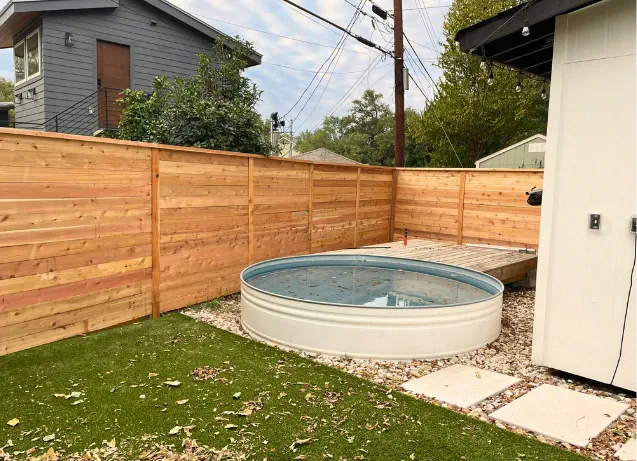
Terrain in Lakeway runs from a gentle grade in the central Lakeway Highlands up to a genuinely steep slope in Flintrock Falls and parts of Rough Hollow. Steep-slope work isn’t the same as flat-lot work. Each panel is stepped or angled to follow grade; posts are set to a consistent vertical, even when the surrounding ground slopes; and structural connections handle the additional shear from the angle change.
Lakeway’s on shallow soil over limestone in many neighborhoods. Post-setting often hits rock within a foot, which means rock-rated augers on most projects. We bring the right augers to every Lakeway quote and adjust the approach when we hit rock rather than fighting through with a smaller hole.
Request a free estimate, and we’ll come out the same week.
Areas We Serve Around Lakeway
Beyond Lakeway itself, we serve the surrounding Hill Country and Lake Travis area, including Bee Cave, West Lake Hills, Rollingwood, Dripping Springs, Spicewood, and the unincorporated stretches west toward Mansfield Dam. We also cover the broader Austin metro up through Round Rock and Leander. If you’re inside roughly thirty miles of Cedar Park, we serve you.
Frequently Asked Questions
Which Lakeway communities do you serve most often?
Most of our Lakeway volume goes to The Hills of Lakeway, Rough Hollow, Flintrock Falls, and Lakeway Highlands. The Hills of Lakeway design committee enforces a tighter cedar-stain palette than most metro HOAs and has specific rules about fence-height transitions on sloped lots. Rough Hollow has separate committees for each phase. We’ve handled enough projects in each to put together approval packages on the first pass.
What changes when you build on Lakeway's steep terrain?
Stepped panels follow the grade, posts get set to a consistent vertical (regardless of ground slope), and panel-to-panel connections need to handle shear from angle changes. Steep-slope projects in Flintrock Falls and parts of Rough Hollow add a day or two to the timeline because each panel is fitted individually. Multi-level decks on Hill Country slopes can run one to two weeks, depending on elevation change.
Why is composite the dominant deck choice on lake-adjacent Lakeway properties?
Lake humidity ages cedar decks faster near Lake Travis than on inland metro lots. Cedar still works on inland Lakeway properties, but if you’re researching long-term maintenance, you’ll usually land on composite. Trex Transcend and TimberTech AZEK both handle the humidity cycles. Composite accounts for roughly two-thirds of our Lakeway deck installs, compared with roughly one-third in markets like Round Rock.
Will deer in The Hills of Lakeway damage my landscaping along the fence line?
Possibly. Six-foot cedar privacy fences keep deer physically out of the back yard, but four-foot front-yard ornamental iron doesn’t. Hills of Lakeway homeowners with significant landscape investment usually go for six-foot privacy on the back and sides; they’ll pair the fence with deer-resistant plant selection in front-yard ornamental areas. We talk through layout and deer-pressure realities during the walkthrough.
How does Lakeway's permitting compare to other metro cities?
The City of Lakeway runs permits through its own development services department, which processes residential applications faster than the busier Round Rock or Leander offices because residential volume is lower. Typical turnaround is under a week. Lakeway’s thresholds match the regional standard. The unincorporated stretches west toward Mansfield Dam fall under Travis County rules, which are looser. Our permit partners handle the application end-to-end.
Are pool fence requirements different at lake-adjacent properties?
Texas pool code itself applies the same way regardless of distance from the lake (four-foot fences, self-latching gates, and climbability standards). What’s different at lake-adjacent properties is material choice. Lake humidity accelerates the aging of aluminum brackets and powder-coated steel more than it does in inland conditions, so we usually spec vinyl pool fences on lake-adjacent runs (see vinyl fence installation for specifics) and reserve aluminum for inland Lakeway properties.
Sloped lot with a leaning fence: can you fix individual posts, or do we need a full rebuild?
Depends on the cause. Posts that lean because the original install didn’t account for slope shear can sometimes be reset individually. Posts that lean because the original install hit limestone too shallowly usually need full replacement on the affected panels. Our fence repair team walks the property and tells you which category applies.
Can you bundle Lakeway projects across fence styles, deck construction, and gate work?
Yes, and we recommend it on multi-element estate-tier projects. Many Lakeway clients book the whole package as a single coordinated job: cedar privacy on visible HOA runs, ornamental iron front-yard accents, a pool fence on the lake side, and composite deck construction. Bundling lets us sequence post-setting, framing, and finish phases efficiently rather than running each as a separate project.
Call (512) 566-7520 or visit our blog for installation guides and HOA-specific details. We’ll walk the property within the week and leave with a written quote.