
What Fence Staining Does for Your Cedar in Texas
Fence staining seals cedar and pine pickets against UV damage, moisture, and mildew. A quality stain extends fence life by three to five years, restores the warm color that fades within eighteen months, and costs a fraction of full replacement.
Most fence problems we repair in Liberty Hill and Manor trace back to one decision: the homeowner waited too long before the first stain. Cedar’s natural rot resistance buys time, but it doesn’t replace the need for a finish. Once the surface goes gray, water absorption can double, fasteners start working loose, and the boards begin to cup. We see the same pattern from Bee Cave to Buda. Six-figure homes with three-year-old fences that look ten years old, all because the original installer skipped the staining conversation or the homeowner assumed cedar didn’t need it.
In Williamson County, our HOA neighborhoods make this worse. Twin Creeks, Avery Ranch, and Brushy Creek all have approved stain colors. If your fence has weathered past the point where the original color is still visible, the HOA may flag it for refinishing during the next walkthrough. Sticking to the schedule keeps you out of that conversation.
When Your Fence Needs Staining
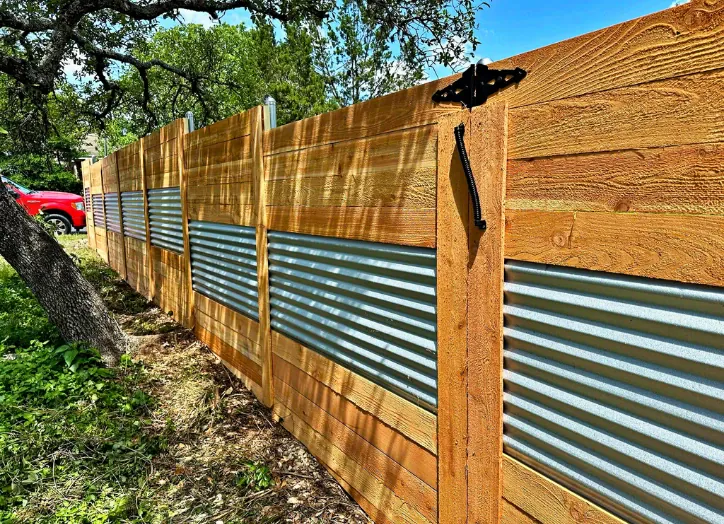
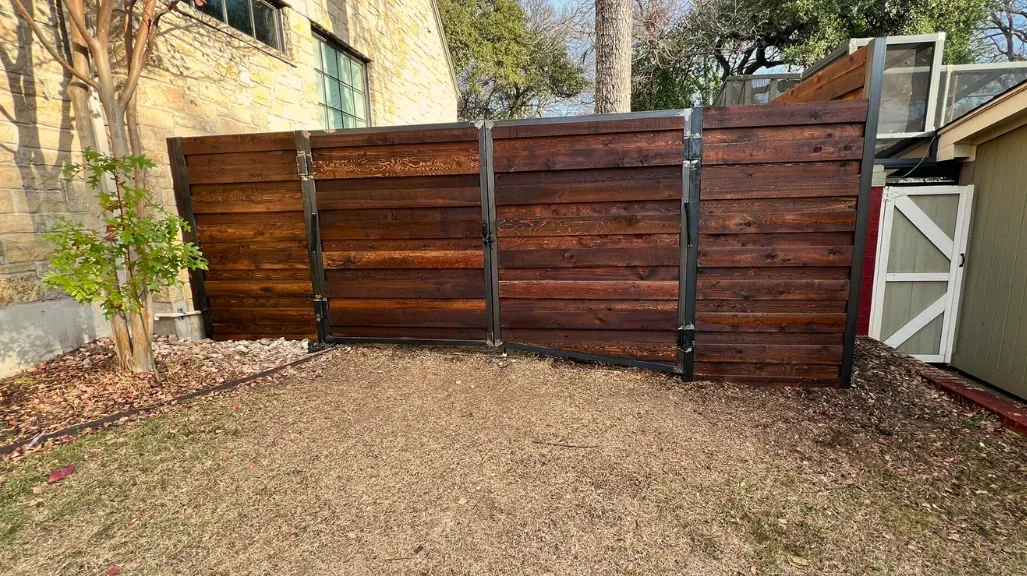
Three signals tell you it’s time. The first is color: a healthy stained fence keeps its tone for two to three Texas summers, and once the surface starts shifting toward gray or silver, the protective layer is gone. The second is water: pour a cup of water onto a board and watch what happens. New stain beads water like a waxed car. The failed stain absorbs the cup in under a minute. The third is texture: run a hand along a picket. If it catches, splinters lift, or the grain feels raised, the wood has dried out and is ready for refinish.
For most Cedar Park homes, the first stain occurs four to six months after installation, once the wood has dried to roughly 15% moisture content. After that, plan on re-staining every two to three years.
Our Fence Staining Process
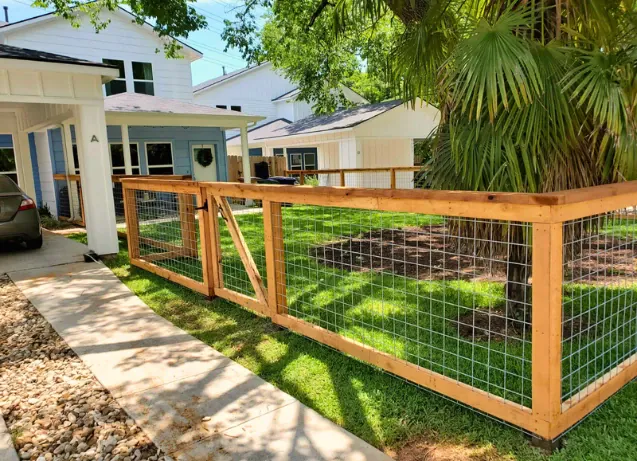
We work the same five steps on every project. First, we pressure-wash to lift dirt, mildew, and any failing finish. Pressure is set carefully because too much wears down the grain. Second, we sand down rough spots and feather any splintered edges of boards. Third, we replace pickets that are too rotted to save with matched cedar from the same yard we use for new builds. Fourth, we apply a UV-rated stain by brush or sprayer, depending on the fence style and the customer’s color choice. Fifth, we seal in the same visit when weather allows, locking in the stain before overnight humidity can affect the cure.
Total time for a standard 150-foot residential fence is 1 to 2 days. Larger fences and corner lots with multiple gates can stretch to three. We handle prep, materials, and cleanup. You don’t lift a finger.
Cost and What Drives It
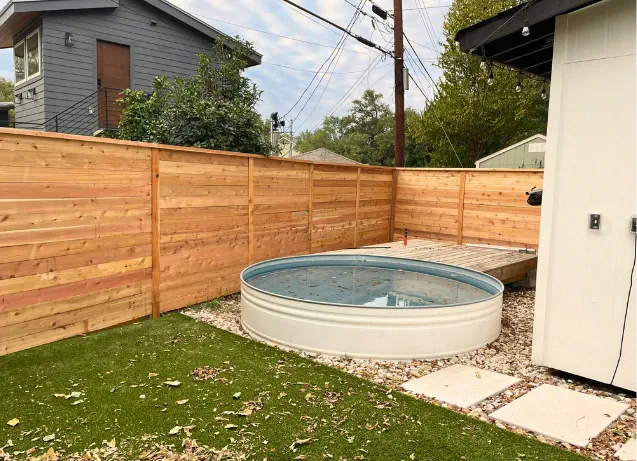
Fence staining cost in Cedar Park depends on four factors. Linear footage is the biggest driver. Wood condition is second: heavily weathered fences need more sanding and board replacement before staining. Stain choice matters next. Semi-transparent oil-based stains penetrate deeper and last longer in the Texas sun than water-based stains, but they cost more per gallon. Finally, access matters. Hillside fences in Lakeway and Bee Cave often need extra labor for ladder work and uneven terrain.
We price per project, not per linear foot, because foot pricing obscures the real variables and leads to surprise charges when the crew finds rot or terrain issues. Every quote is written, and every quote breaks down materials, labor, and timeline before any work starts.
Request a free estimate, and we’ll come out the same week.
HOA-Compliant Staining for Cedar Park Communities
We’ve stained fences in Twin Creeks, Avery Ranch, Cypress Creek, Ranch at Brushy Creek, and most of the major HOA subdivisions in Cedar Park, Round Rock, and Leander. We know the approved stain colors and the documentation requirements. If your HOA needs a spec sheet showing stain brand, color, and application method, we put that together for you before the first board is cleaned. No surprise violation letters two weeks after the work’s done.
For homes outside HOA jurisdiction, color is your call. We bring sample boards to the walkthrough so you can see how three or four options will read on your actual fence in Cedar Park sun.
Areas We Serve for Fence Staining
Cedar Park is the home base. We stain fences across Williamson County and into the surrounding suburbs, including Manor and Buda, where flat clay-heavy lots create their own moisture-management challenges, and Bee Cave and Lakeway, where Hill Country humidity makes weather-window timing harder. If you’re in any of those communities or any zip code in between, the answer to “do you serve us” is almost always yes.
Frequently Asked Questions
How often does a cedar fence need staining in Cedar Park?
Every two to three years for most cedar fences in Williamson County. Texas heat, UV, and humidity swings strip stain faster than northern climates. The first stain on a new fence occurs four to six months after installation, once the wood has dried to about 15% moisture content.
What's the best time of year to stain a fence in Central Texas?
Late spring and early fall are the best windows. We avoid staining when temperatures exceed 90 degrees, when humidity stays above 70 percent for more than a day, or when rain is forecast within 48 hours.
Do you stain HOA fences in Cedar Park, Round Rock, and Leander?
Yes. We’ve handled HOA-compliant staining in Twin Creeks, Avery Ranch, Cypress Creek, Ranch at Brushy Creek, and most major subdivisions in the area. We confirm approved stain colors with the HOA before we start, and we put together the documentation package if your HOA needs one.
How long does fence staining take?
A standard 150-foot residential fence takes one to two days, depending on prep work. Larger fences, corner lots with multiple gates, or fences with significant board replacement can run three days. We give you a firm timeline in the written quote.
Can you stain a fence we built ourselves or one that another contractor installed?
Yes, as long as the structure’s sound. We inspect first, flag any structural issues, and either repair them ourselves or recommend a fence repair before staining. Our fence repair team handles structural fixes if needed.
What kind of stain do you use?
We use semi-transparent oil-based stains with UV inhibitors rated for Texas weather. The brand and color depend on what your HOA approves and what holds up best for your fence’s exposure. We bring physical samples to the walkthrough.
Will fence staining cover up gray weathering?
Mostly, yes. Light to moderate gray comes back to a warm tone after pressure washing and staining. Severe weathering with raised grain or splintering needs sanding first, and badly rotted boards need replacement. We assess the condition during the walkthrough and tell you up front what’s recoverable.
Do you offer privacy fence builds and full fence installation?
Yes. Beyond staining, our crews handle privacy fence installation, wood and cedar fence builds, and full fence repair. If your fence is past the point where staining will save it, we’ll quote replacement instead and walk through the trade-offs.
Call (512) 566-7520 or visit our blog for staining guides and seasonal advice. We’ll come out within the week, check the moisture content, talk through color options, and leave with a written quote.