
What We Build for Cedar Park Homes
Fence and deck work in Cedar Park covers six-foot cedar privacy fences for HOA neighborhoods, four-foot ornamental iron for front-yard accents, full deck installation in cedar or composite, plus fence repair, staining, and HOA design review submittals on every project.
The mix here is meaningfully different from what we build in Bee Cave, where pool fencing dominates, or in Manor, where black gumbo clay drives every install decision. Cedar Park’s HOA palette is consistent. Most back-yard fences are six-foot cedar privacy with cap-and-trim. Most front-yard accents are four-foot ornamental iron. Most decks are single-level backyard builds in cedar or composite, sized for the typical 7,000- to 12,000-square-foot lot. Pool fences come up on maybe one in five Cedar Park projects.
What sets Cedar Park work apart isn’t the materials. It’s the HOA design-review density. Almost every neighborhood requires submittal review, and rules vary from subdivision to subdivision. Doing this well means knowing the specs before the walkthrough, not figuring them out after.
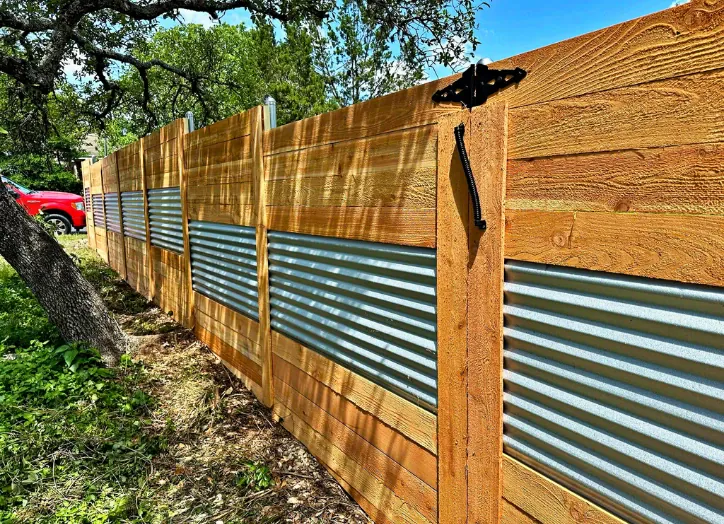
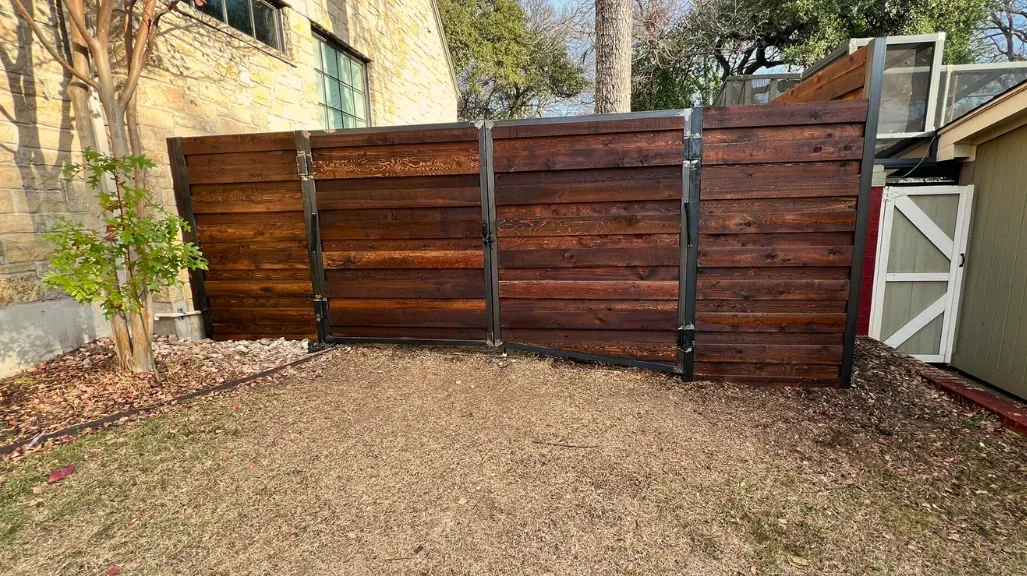
Cedar Park Neighborhoods We Serve
Twin Creeks is one of our most frequent service areas in Cedar Park. Tightly clustered HOA homes with active design review, a strict palette of stained cedar matching the developer’s color, and a preference for cap-and-trim on visible runs. We’ve handled enough Twin Creeks submittals to put together approval packages on the first pass.
Avery Ranch spans multiple phases between Cedar Park and Round Rock, each with its own design committee. Six-foot cedar privacy with cap-and-trim is standard, and iron front-yard accents are common on corner lots. Decks here are made of a composite material due to full-sun exposure.
Brushy Creek and Ranch at Brushy Creek are mid-tier HOAs covering the southern portion of Cedar Park. The fence palette is similar to Twin Creeks, with looser color enforcement. Existing fences in older Brushy Creek phases are mostly past their twenty-year mark.
Cypress Creek is the older HOA neighborhood north of 1431. Original fences here date to the late 1990s and early 2000s, and most homes need replacement rather than repair. Cedar privacy with proper post-setting is the standard request.
Buttercup Creek and Anderson Mill sit on the southwestern edge. Lot sizes run slightly larger than master-planned subdivisions, HOAs are less active, and projects often include longer fence runs and decks on slightly sloped yards.
The unincorporated stretches off Parmer Lane and toward Lago Vista don’t have HOA jurisdiction. City of Cedar Park setbacks still apply, and we work with permit partners on any project requiring permits.
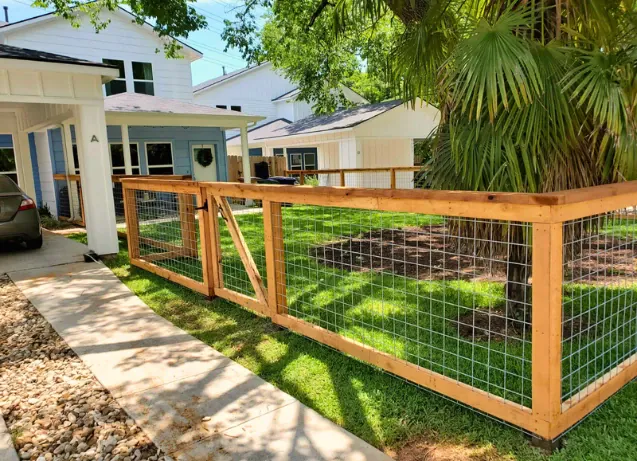
What HOA Review Actually Involves
The biggest difference between a Cedar Park fence project and an unincorporated Williamson County project is the design review step. Most Cedar Park HOAs require a submittal package before construction: material spec, height, picket spacing, stain color, gate placement, and a property-line diagram. Some require photographs. Some require neighbor notification on shared fences.
We put the submittal package together as part of the quote, not a separate billable step. Doing it right the first time avoids the two-week delay from a rejected submittal.
Request a free estimate, and we’ll come out the same week.
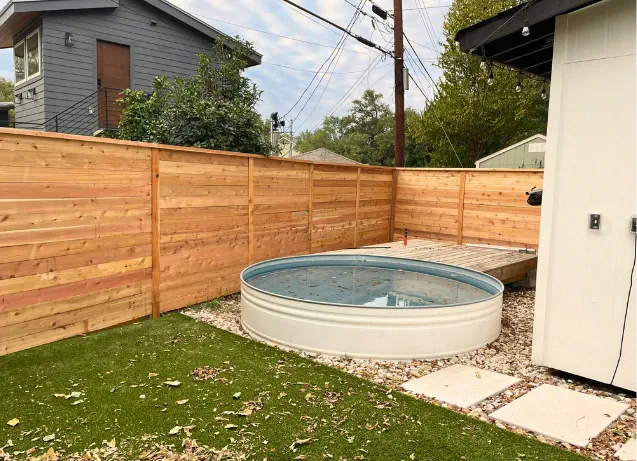
Materials That Work in Cedar Park
Cedar dominates our wood installs, both for privacy fence installation and shorter front-yard runs. We use rough-sawn western red cedar pickets from the yard we’ve used since 2013, set six-foot posts thirty inches deep in the clay loam. Composite is our most-installed deck material. Trex Transcend handles the full Texas sun, and TimberTech AZEK is the premium step up for cooler summer surfaces.
Aluminum and ornamental iron handle the four-foot front-yard fences common across Cedar Park HOAs. We use galvanized hardware throughout. Vinyl is less common here than outside the metro, but we install it when an HOA palette allows.
We don’t install pressure-treated pine privacy fences in Cedar Park. The chemical treatment fights stain absorption, and the boards warp in Texas heat within a few years.
Why Local Knowledge Matters Here
Working in Cedar Park is different from working in Leander or Round Rock. HOA density is higher, design palettes are more consistent, and the typical project is six-foot cedar privacy on a clay loam lot rather than a custom build on acreage. A contractor working mostly in unincorporated Williamson County might not know that Twin Creeks requires a specific stain color, or that Avery Ranch’s design committee meets twice a month. We’ll have the right submittal package together before we quote.
Fence Repair and Staining Across Cedar Park
Beyond new builds, our fence repair team handles repairs on existing fences across all Cedar Park HOAs. Common repairs are leaning posts after a wet season, sagging gates that won’t latch, and weathered cap-and-trim. We also provide fence staining on the schedule HOAs typically require. Most Cedar Park HOAs require re-staining every three to five years to keep fences within palette.
Areas We Serve Around Cedar Park
Beyond Cedar Park itself, we serve the surrounding northwest Austin metro, including Leander, Round Rock, Lakeway, Liberty Hill, Manor, Bee Cave, and Buda. If you’re inside roughly thirty miles of Cedar Park, we serve you.
Frequently Asked Questions
1. Do you work in Twin Creeks and Avery Ranch?
Yes. Both are among our most frequent Cedar Park service areas. Twin Creeks operates an active design review committee with a strict stain-color palette that matches the original developer spec; Avery Ranch’s multi-phase HOA has separate design committees for each section. We’ve handled enough projects in both communities to put together approval packages on the first pass.
2. What's the most common fence in Cedar Park HOAs?
Six-foot cedar privacy with cap-and-trim is the standard request across most master-planned Cedar Park communities. Twin Creeks specifically requires a cap-and-trim profile that’s tighter than the regional standard, while Brushy Creek and Cypress Creek allow more flexibility on cap detail. Front-yard accents are usually four-foot ornamental iron, with corner-lot side-yard sections requiring HOA-specific style approval. The combination of a strict back-yard palette with somewhat flexible front-yard accents is distinct to Cedar Park’s master-planned cluster.
3. Do all Cedar Park HOAs require design review?
Most active HOAs do, including Twin Creeks, Avery Ranch, Brushy Creek, Cypress Creek, and Ranch at Brushy Creek. Buttercup Creek and Anderson Mill on the southwestern edge have lighter requirements. The unincorporated stretches off Parmer Lane and toward Lago Vista don’t have HOA jurisdiction. We confirm the specific HOA’s submission requirements during the walkthrough; the design committee meeting cadence varies subdivision by subdivision and affects project timing.
4. How long does a fence or deck project take in Cedar Park?
Standard residential fence: two to four days. HOA fence with cap-and-trim and color-matched stain to the developer palette: three to five days. Twin Creeks and Avery Ranch projects typically run a day longer because the cap-and-trim spec is tighter than the regional standard. Standard back-yard decks run four to seven business days. Multi-level decks or projects requiring HOA design submittal that haven’t started yet add one to three weeks to the review timeline. We’ll give you firm dates in the written quote.
5. Do I need a permit in Cedar Park?
The City of Cedar Park requires permits for fences over seven feet in height and for most attached decks more than thirty inches above grade. Permits are processed through the city’s development services office, and the typical turnaround time for straightforward fence work is about a week. HOA approval is required separately and applies regardless of height. The most common surprise for new Cedar Park homeowners is that HOA review is mandatory even for a six-foot fence that’s permit-exempt at the city level. We coordinate both the permit and the HOA submittal as part of the quote.
6. How deep do you set fence posts in Cedar Park soil?
Six-foot posts go thirty inches deep minimum, eight-foot posts thirty-six inches minimum, both in concrete with a flared base. Cedar Park sits on central Williamson County clay loam, which expands and contracts seasonally; the soil here moves predictably enough that we can specify a uniform post depth across most projects, unlike in Liberty Hill, where caliche layers require per-section adjustments. The flared base gives the post’s bottom something to grab against the seasonal soil movement.
7. Will my fence look the same on both sides?
It depends on the style. Board-on-board with cap-and-trim looks finished on both sides because the cap conceals the rail side. Most Cedar Park HOAs require the smooth side to face the neighbor, which we handle automatically. Shadowbox layouts look identical from both sides. Side-by-side and traditional pickets show the rail-side from the back.
8. Do you offer fence installation, repair, and staining all together?
Yes. We handle full fence installation for new builds and replacements, repair on existing fences through our same crew, and staining to keep cedar fences within the strict HOA palette most Cedar Park communities enforce. The Cedar Park staining cycle is typically every three to four years for cedar privacy fences in HOA neighborhoods, which is shorter than the cycle for non-HOA properties because the design committees actively monitor stain match across the community.