
What We Build for Brushy Creek Homes
Brushy Creek work covers six-foot cedar privacy fencing with cap-and-trim on HOA runs, fence replacement on 1980s-era homes nearing the end of their 20-year life cycle, trail-easement-adjacent installs along the Brushy Creek Regional Trail corridor, deck work on existing structures, and Williamson County permit coordination.
The Brushy Creek mix is different from newer Cedar Park master-planned communities like Twin Creeks. Most of our volume here is replacement work, not new construction. Original homeowners who built in the late 1980s and early 1990s are now on their second-generation cedar fence, and that second fence is reaching the end of its life. The decision isn’t “should we build a fence” but rather “do we replace like-for-like or upgrade the spec.”
Brushy Creek Sections We Serve
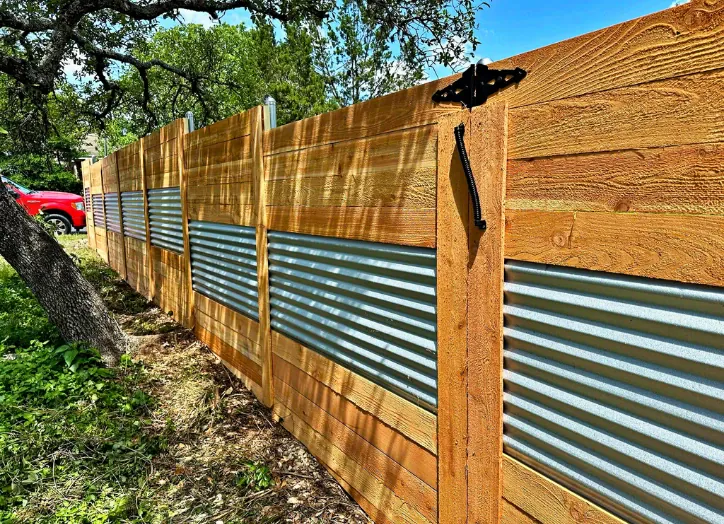
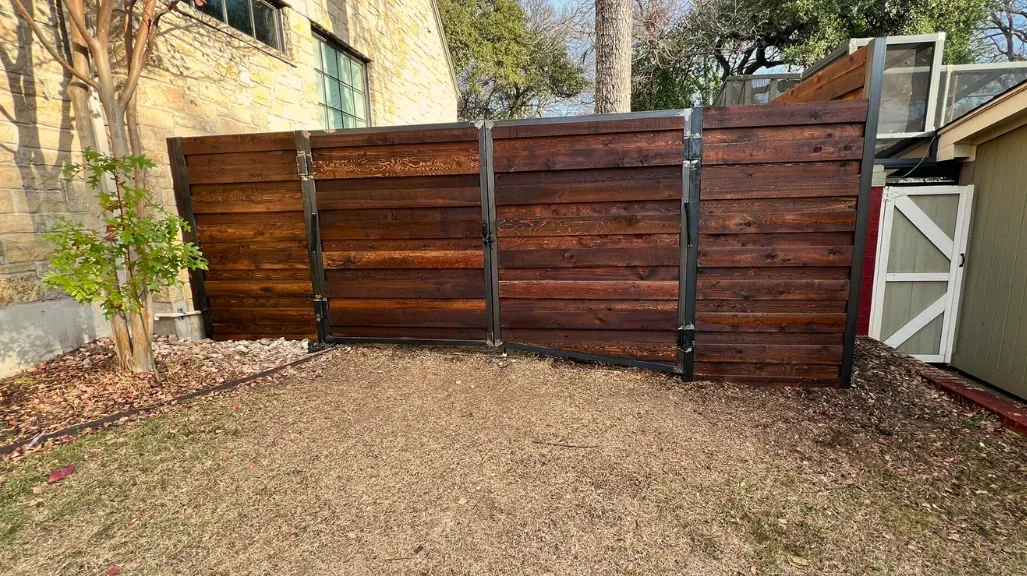
Brushy Creek HOA covers the older original neighborhoods in the northern and eastern sections. 1980s construction with mature oak shade across most lots. Submittal review runs on a rolling basis with consistent palette enforcement. Six-foot cedar with cap-and-trim is standard, with a darker semi-transparent stain consistent with the established palette.
Ranch at Brushy Creek sits on the southwestern edge as a separate community. Newer construction (mostly post-2000) with cleared lots and less mature shade. The committee enforces palette rules slightly more loosely than Brushy Creek HOA proper, but still requires submittal photographs and color samples.
Older phases (the original 1980s-era subdivisions north of the trail) are where most of our full-replacement work happens. Original fences are reaching the 20-year end of life simultaneously across these blocks. Most homeowners time the replacement against the next HOA stain cycle to avoid double-paying for finish work.
Trail-corridor properties sit along the Brushy Creek Regional Trail, where backyards meet the easement. These installs require coordinated setbacks because the easement sits between the property line and the trail, and the visible-from-trail side reads to public walkers rather than just the next-door neighbor.
What Makes Brushy Creek Work Distinctive
Three things shape our Brushy Creek installs that don’t apply to the newer Cedar Park master-planned communities.
Mature oak root systems. Original Brushy Creek lots have forty-year-old oak shade. Post-setting requires careful auger work to avoid cutting major roots, which could damage the tree. We adjust post spacing per property when roots run shallow rather than forcing the standard spacing.
Trail-easement adjacency. The Brushy Creek Regional Trail runs through the community for several miles, and roughly one in five of our installs has a backyard meeting the easement. The visible-from-trail side gets a cap-and-trim finish on both sides because trail walkers see it daily; see our privacy fence installation page for the full structural pattern.
Replacement-cycle timing. Original homeowners who installed cedar fences in the late 1980s are now on their second or third fence. The cycle creates demand that newer Cedar Park communities don’t have yet. We see roughly twice as many replacement projects as new builds in Brushy Creek.
Request a free estimate, and we’ll come out the same week.
Materials That Work in Brushy Creek
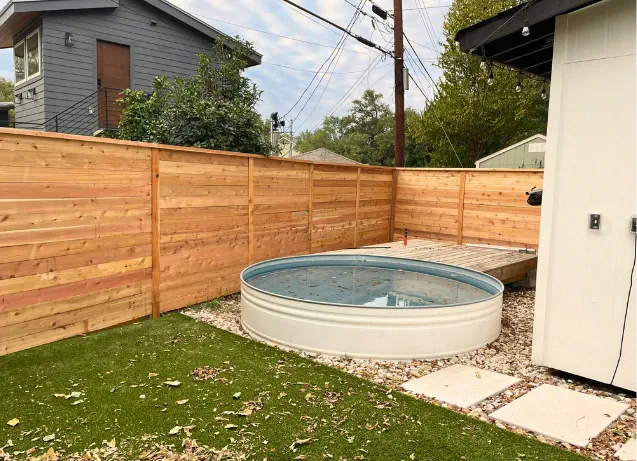
Cedar dominates the wood installs across both Brushy Creek HOA and Ranch at Brushy Creek, with western red cedar the standard spec for cap-and-trim privacy. We’ve sourced from the same yard since 2013, which matters in Brushy Creek specifically because the older HOA palette is calibrated against our yard’s consistent color tone. For wood fence installation, generally, see our wood page.
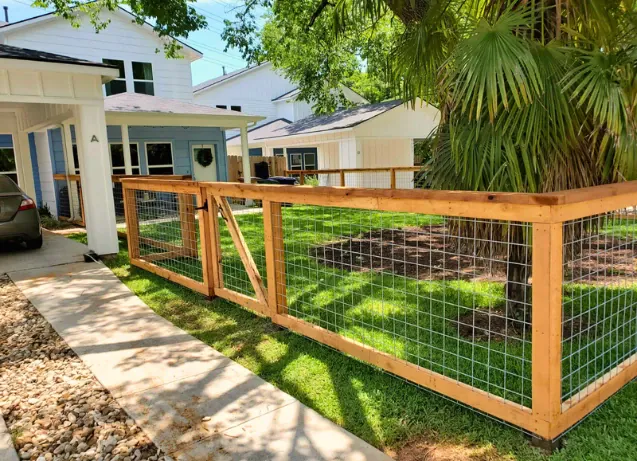
Aluminum and ornamental iron handle the four-foot front-yard fences some homeowners install on corner lots, though most of the community uses cedar throughout because the HOA palette favors it. We don’t install pressure-treated pine privacy fences in Brushy Creek HOAs.
Frequently Asked Questions
What's the difference between Brushy Creek HOA and Ranch at Brushy Creek for fence approval?
Two separate communities with separate committees. Brushy Creek HOA covers the older 1980s-era neighborhoods with consistent palette enforcement and rolling submittal review. Ranch at Brushy Creek is a newer community (mostly post-2000) with slightly looser enforcement but the same submittal-photo and color-sample requirements. We’ve worked on enough projects in both to get approval packages right the first time.
My fence is original to a 1985-era Brushy Creek house. Can you replace it?
Yes, and replacement (rather than repair) is usually the right answer at the twenty-year end-of-life. By that point, posts are rotted at the ground line, rails have warped, and replacing individual pickets won’t restore structural integrity. Full replacement runs three to five days on a standard lot and includes demolition and disposal.
My backyard meets the Brushy Creek Trail. Are there special design rules?
The HOA design standards apply on top of the general fence requirements. The trail-facing side must have a cap-and-trim finish on both sides, as trail walkers see it as a public-facing surface. Some sections require a setback from the easement boundary; we confirm the specific line during the walkthrough, as it varies by block.
How do you handle post-setting around the mature oak trees on Brushy Creek lots?
Carefully and per-property. Oak roots on older Brushy Creek lots can run shallow and wide, and cutting through major roots damages the tree’s anchor structure. We adjust post spacing where roots are visible, and in tight cases, we’ll relocate a post by a foot or two to clear a root system. We don’t cut major oak roots to force the standard spacing.
Does Williamson County require a permit for fences in Brushy Creek?
The unincorporated parts of Brushy Creek fall under Williamson County rules: permits are required for fences over 7 feet and for most attached decks raised meaningfully above grade. Within the City of Cedar Park’s jurisdiction (most of Brushy Creek HOA proper), the city’s permit thresholds apply. Both processes residential applications in a few days. Our permit partners handle the application end-to-end.
Will my new fence match the existing palette across Brushy Creek HOA?
Yes. The HOA palette has been consistent for decades, and we keep records of the specific stain colors per section. Most Brushy Creek HOA properties use a darker semi-transparent stain. Ranch at Brushy Creek uses a slightly lighter palette. We pull the color from the HOA documentation before quoting.
Can you handle full fence replacement plus deck refinishing as one project?
Yes, and many Brushy Creek clients book the package together. 1980s-era homes that need fence replacement often also need deck refinishing or replacement, since the fence and deck date from the same construction period. Bundling lets us sequence demo, framing, and finish phases efficiently.
Do you offer ongoing maintenance after installation?
Yes. We handle fence staining on the HOA stain cycle, plus repair work through our fence repair team for issues that come up over a fence’s life: leaning posts, gate sag, picket damage from storms or fallen branches. Brushy Creek’s mature trees mean fallen-branch damage is more common here than in newer Cedar Park communities.
Call (512) 566-7520 or visit our blog for installation guides and HOA-specific details. We’ll walk the property within the week and leave with a written quote.